Your Journey Begins in Middle Caicos

Middle Caicos Feels Vast, Dramatic, and Rawly Untouched

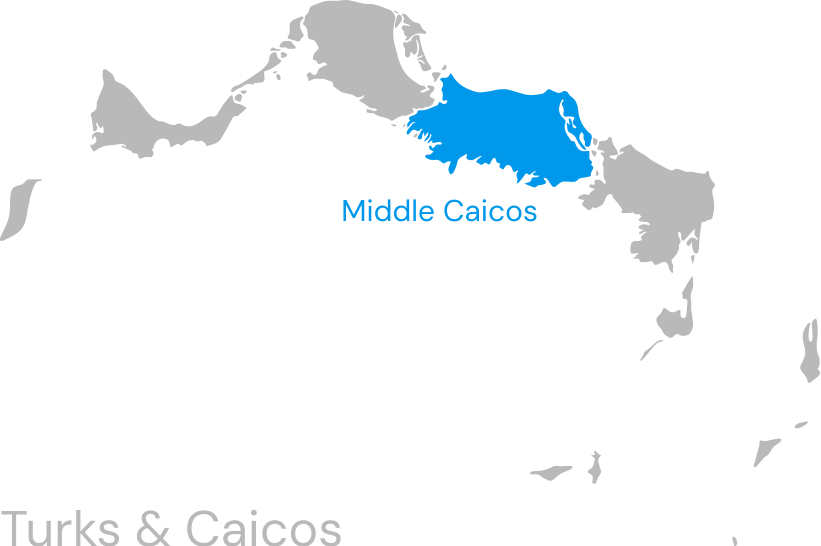
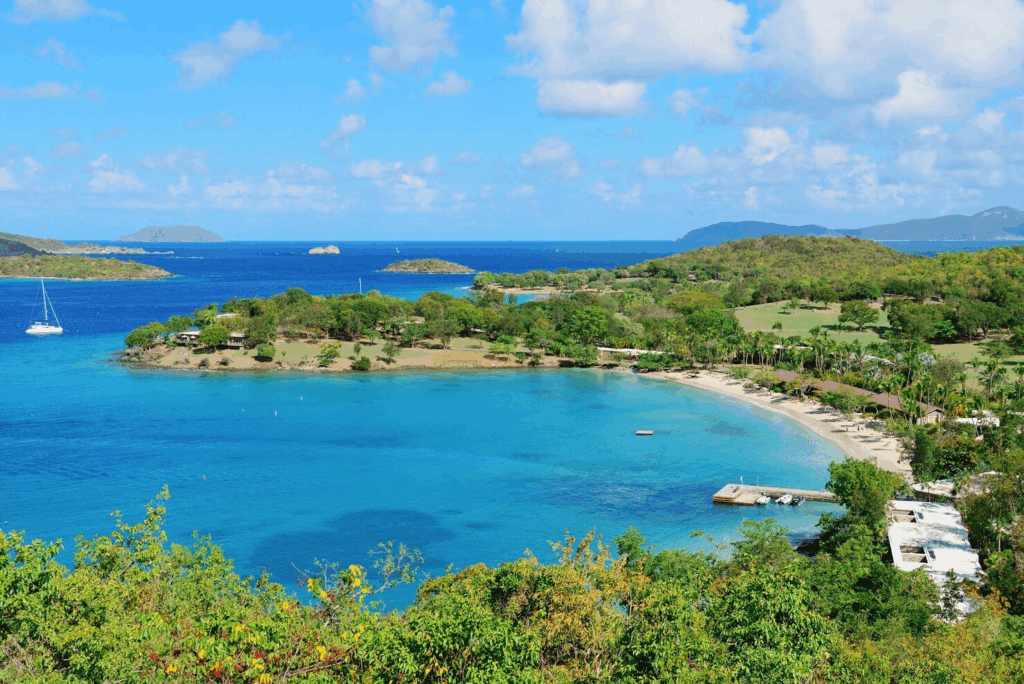
Middle Caicos is defined by scale and raw natural presence. As the largest island in Turks & Caicos, it remains one of the least developed, where dramatic coastlines, limestone cliffs, and wide, empty beaches shape the experience. This is not a destination built around convenience—it is shaped by landscape, distance, and quiet.

Middle Caicos spans approximately 48 square miles, making it the largest island in the archipelago, yet its population is fewer than 300 people. Most of the island is wild, covered in low tropical brush, limestone karst, and coastal bluffs that drop sharply into the Atlantic. The island’s north shore faces the open ocean, where winter swells crash against cliffs. The south shore faces the Caicos Bank, a vast, shallow protected area where water turns turquoise and calm.

The island was once home to a significant Lucayan Indian population, evidenced by artifacts found in the Conch Bar Caves. Later, Loyalist plantations operated here, leaving behind ruins now reclaimed by bush. Today, Middle Caicos is for travelers who value landscape over luxury, solitude over service, and raw nature over refinement.

With Air Flight Charters, reaching Middle Caicos becomes a seamless process, allowing travelers to access one of the most untouched parts of the Caribbean without unnecessary complexity.

Explore Middle Caicos, Turks & Caicos

Middle Caicos is different from any other island in Turks & Caicos. It is larger than Providenciales but has no traffic lights, no resorts, no golf courses, and no cruise ship pier. What it does have: the most dramatic coastline in the country, the largest cave system in the Caribbean, and miles of beach where you will see nobody.

Mudjin Harbour

The island’s most striking location, and arguably the most dramatic coastal view in all of Turks & Caicos. Limestone cliffs rise 40 to 60 feet above the Atlantic, dropping straight into turquoise water. A narrow staircase leads down to a small, secluded beach tucked between the cliffs. An offshore rock formation called Dragon Cay sits just beyond the break. The waves crash. The views stretch endlessly. Mudjin Harbour is not a swim beach (the water is rough), but it is an unforgettable viewpoint.

Bambarra Beach

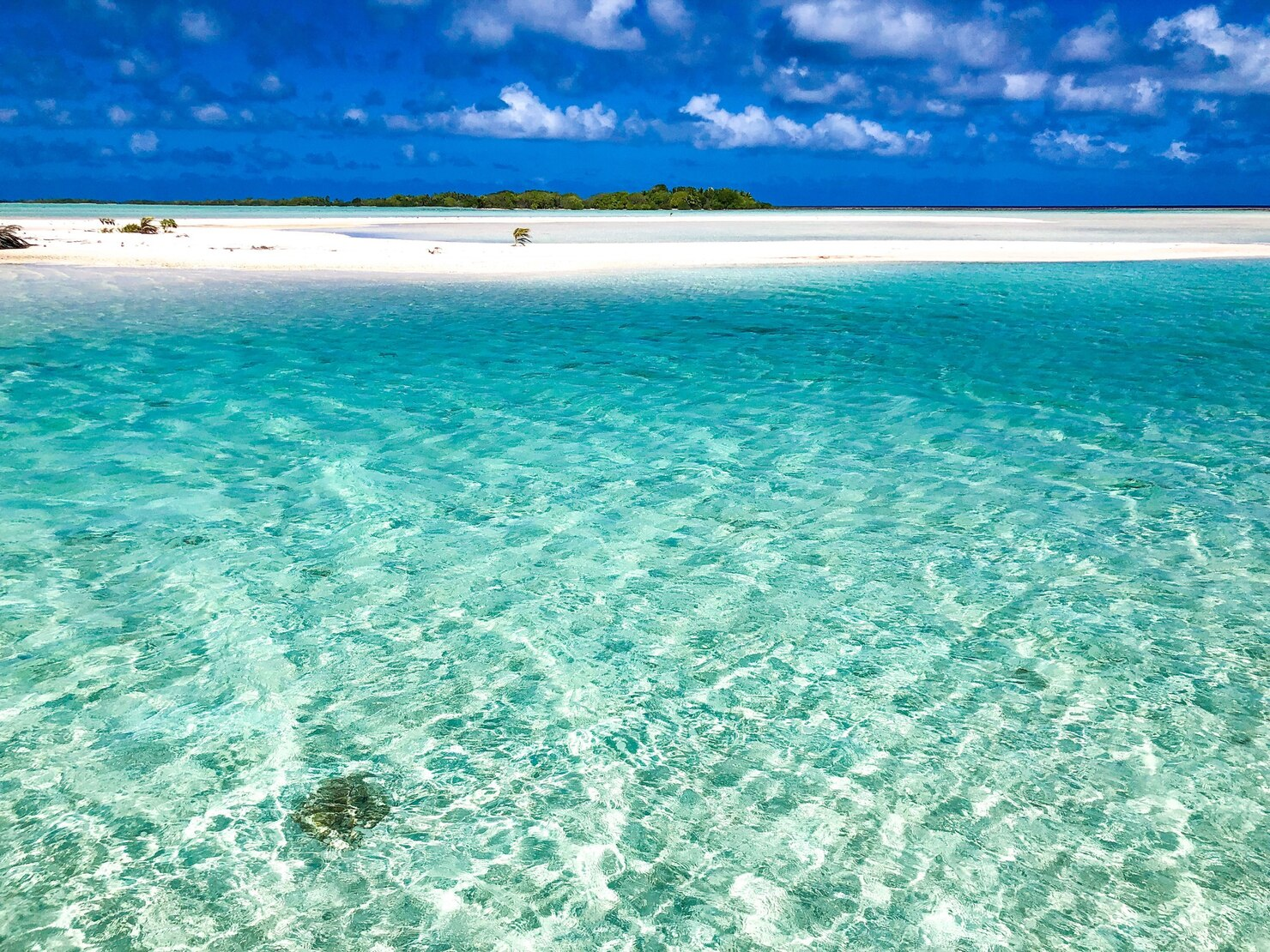
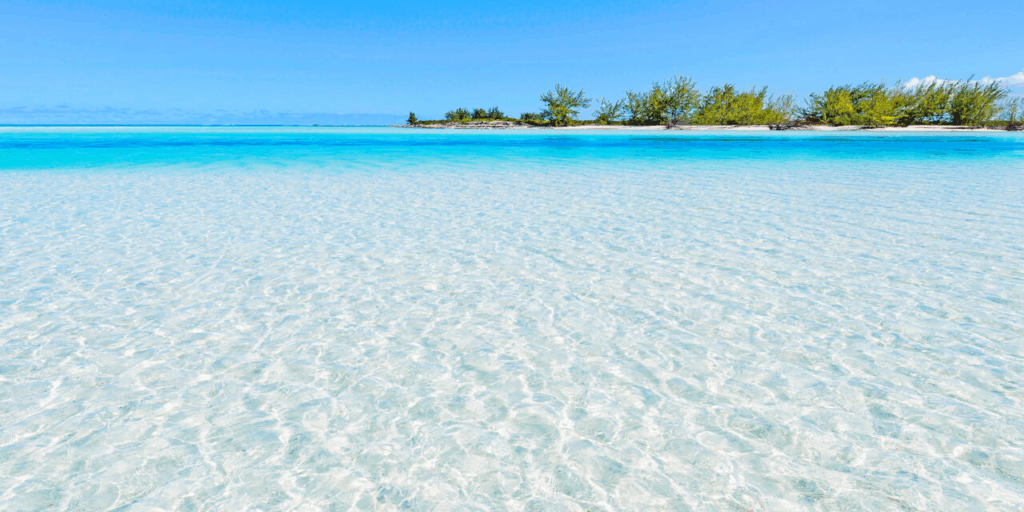
A wide, open shoreline on the south side of the island, facing the calm, shallow waters of the Caicos Bank. The sand is soft. The water is clear and protected. Unlike the north shore, Bambarra Beach has no waves to speak of—just gentle lapping and endless turquoise. The beach is named after Bambarra, the island’s main settlement. On most days, you will share it with nobody.

Conch Bar Caves

One of the largest non-submerged cave systems in the Caribbean. The caves extend for hundreds of yards underground, with passages, chambers, and impressive limestone formations including stalactites, stalagmites, and flowstones. The caves were used by the Lucayan Indians centuries ago—their artifacts have been found inside. Later, guano mining operated here. Tours are led by local guides (arrange in advance). Bring closed-toe shoes and a flashlight. The caves are dark, cool, and genuinely adventurous.

Indian Cave

A large, undeveloped cave on the island’s north side, accessible via a short trail from the road. Unlike Conch Bar, Indian Cave is not commercially operated. No guides. No lights. No handrails. Bring a flashlight. Watch your footing. The cave features multiple chambers and openings that allow light to filter through. A sense of discovery here that organized tours cannot replicate.

The Crossing Place Trail

A historic trail that once connected the Lucayan Indian settlements on the north and south coasts. Today, it serves as a hiking path across the island’s narrowest point (approximately 1.5 miles). The trail passes through limestone karst, low brush, and coastal rock. The north end emerges near Mudjin Harbour. The south end reaches the Caicos Bank shoreline. Not an easy walk—wear sturdy shoes, carry water, and go early to avoid midday heat.

Haulover Beach

A remote, undeveloped beach on the island’s northwest coast. Accessible via a rough dirt road (4×4 recommended). The beach faces the Atlantic, so conditions can be rough. The appeal here is total isolation. On many days, you will be the only person on miles of shoreline.

Dragon Cay

The small, rocky offshore island visible from Mudjin Harbour. Not accessible by foot. The cay’s shape resembles a dragon from certain angles, hence the name. The surrounding water is rough—best viewed from the cliffs rather than attempted by boat.

The Causeway to North Caicos

A man-made causeway connecting Middle Caicos to North Caicos, built in 1993. The drive across the causeway takes approximately 10 minutes, crossing shallow water and mangroves. The causeway makes it easy to explore both islands within a single stay without additional flights. For visitors arriving by private charter, the causeway is the final leg of the journey from North Caicos Airport (NCA) to Middle Caicos.

No Resorts. No Crowds. No Compromise

Middle Caicos has no hotels larger than a small inn. Accommodations are limited to rental villas, a few guesthouses, and eco-lodges. There are no restaurants beyond small local spots with inconsistent hours. There is no nightlife. There is no concierge. What exists is landscape, solitude, and the freedom to explore without interruption. This is not for everyone. For the right traveler, it is perfect.

Traveling to Middle Caicos requires a more considered approach, as the island does not operate as a primary commercial hub. Indirect routing, limited schedules, and multi-step transfers can make traditional travel restrictive and time-consuming. There is no commercial airport on Middle Caicos itself. The closest aviation gateway is North Caicos Airport (NCA), followed by a drive across the causeway.

Private charter flights simplify this process by offering direct access into nearby gateways, flexible scheduling, and smooth coordination between air and ground transfers. Air Flight Charters allows travelers to maintain full control over their journey, ensuring that even remote destinations remain accessible without disruption.

  • Direct Access to the Gateway: Fly directly to North Caicos Airport (NCA), the closest aviation point to Middle Caicos, without relying on ferry schedules or regional carriers.
  • No Ferry, No Waiting: The ferry from Providenciales to North Caicos runs on limited schedules. Private charter eliminates the ferry entirely. Fly direct. Drive across the causeway. Be on Middle Caicos within an hour of landing.
  • Flexible Multi-Island Itineraries: Combine Middle Caicos with North Caicos, Providenciales, or Grand Turk in a single seamless trip.
  • Bring Supplies from Provo: Middle Caicos has no grocery stores of significance. Stock up in Providenciales before departing. Your private charter accommodates luggage, coolers, and supplies without baggage restrictions.
  • Arrive on Your Schedule: Regional flights to NCA are infrequent. Private charter operates when you want to depart, whether early morning for a day trip or late afternoon for an overnight stay.
  • Same-Day Exploration from Provo: Depart Providenciales in the morning. Fly to North Caicos (15–20 minutes). Drive across the causeway. Explore Mudjin Harbour and the Conch Bar Caves. Return to Provo by evening. A full day on Middle Caicos without an overnight stay.
Request Quote

Access to Middle Caicos is intentionally indirect, preserving its undeveloped character while still allowing efficient entry through nearby islands. Private aviation ensures that this transition remains smooth and well-coordinated. The journey requires two stages: (a) private charter to North Caicos Airport, followed by (b) ground transfer across the causeway to Middle Caicos.

Stage One: North Caicos Airport (NCA / MBNC)

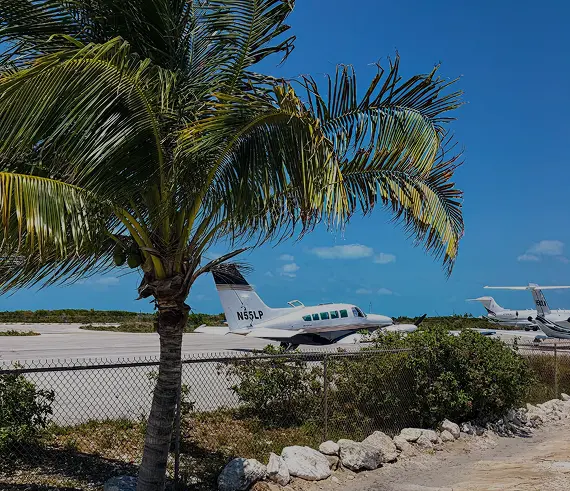
The closest aviation access point to Middle Caicos. North Caicos Airport supports regional and private charter flights with quick transfers to Middle Caicos via the connecting causeway. The airport is small, designed for general aviation and regional turboprops.

  • IATA Code: NCA
  • ICAO Code: MBNC
  • Runway Length: 3,300 feet (1,006 meters)
  • Runway Surface: Asphalt
  • Elevation: 10 feet (3 meters) above sea level
  • Best For: Direct access to the causeway and onward ground transfer to Middle Caicos

Stage Two: Middle Caicos Access (via Causeway)

A direct road connection links North Caicos to Middle Caicos, allowing seamless ground travel between the islands without the need for additional flights once in the region. The causeway was built in 1993 and crosses approximately 1.5 miles of shallow water and mangroves.

  • Drive Time from NCA to Causeway: Approximately 10–15 minutes
  • Drive Time across Causeway: Approximately 10 minutes
  • Total Ground Transfer from NCA to Middle Caicos: Approximately 20–30 minutes

Alternative Gateway: Providenciales International Airport (PLS / MBPV)

The main international gateway to Turks & Caicos, often used for long-range arrivals before a short private transfer to North Caicos and onward road access to Middle Caicos. Most U.S.-originating private charter flights to Middle Caicos will route through PLS for customs clearance, then continue to NCA as an inter-island flight.

  • IATA Code: PLS
  • ICAO Code: MBPV
  • Runway Length: 9,301 feet (2,835 meters)
  • Best For: International arrivals, customs clearance, and long-range private jet operations

What to Expect on Arrival at NCA and Transfer to Middle Caicos

Private charter passengers arriving at North Caicos Airport experience a straightforward, efficient arrival. From wheels-down, the drive across the causeway to Middle Caicos takes approximately 20–30 minutes.

Important Information for Private Flyers

  • Fees & Requirements: Landing fees apply at NCA (included in your detailed quote). For international arrivals entering Turks & Caicos at PLS, customs clearance occurs at PLS. Inter-island flights from PLS to NCA require no additional customs.
  • Documentation: For international arrivals, valid passport required. For inter-island flights from PLS to NCA, no additional documentation needed.
  • Ground Transportation: Rental cars are available on North Caicos (recommended). A 4×4 or SUV is strongly recommended for Middle Caicos—some roads to Mudjin Harbour, Haulover Beach, and Indian Cave are unpaved and rough. Let Air Flight Charters arrange ground transportation in advance so a vehicle is waiting when you arrive at NCA.

Our detailed quotes always include all applicable taxes, fees, and FBO handling charges. For international itineraries, our pilots coordinate all customs paperwork and fees on your behalf at the port of entry (PLS).

Middle Caicos is the most remote and least developed populated island in Turks & Caicos. It is not for first-time Caribbean travelers. It is not for travelers who need restaurants, cell service, or concierge desks. It is for travelers who want to experience a Caribbean island that has barely changed in decades. Understand what you are signing up for.

There Are No Real Towns

Middle Caicos has small settlements: Bambarra, Lorimers, and Conch Bar. “Settlement” means a few houses, maybe a small shop, and a population measured in dozens. Do not expect grocery stores, gas stations, or restaurants beyond occasional local spots with inconsistent hours.

Bring Everything You Need

There are no grocery stores of significance on Middle Caicos. No pharmacies. No medical facilities. Bring all food, drinks, snacks, medications, sunscreen, insect repellent, and supplies for your entire stay. The nearest real grocery store is on Providenciales. Your private charter can accommodate coolers and supplies.

A 4×4 Is Not Optional

Some of the best locations on Middle Caicos (Haulover Beach, Indian Cave, parts of the Crossing Place Trail trailhead) require driving on unpaved, rough roads. A standard rental car may not be sufficient. Rent a 4×4 or SUV on North Caicos before crossing the causeway.

The Causeway Is Safe but Exposed

The causeway connecting North Caicos to Middle Caicos is paved and well-maintained. It crosses open water and mangroves. In normal weather, it is perfectly safe. During tropical storms or high winds, the causeway can flood or become impassable. Check conditions before crossing.

Cell Service Is Extremely Limited

Do not rely on cell service on Middle Caicos. Signal is weak near the settlements, nonexistent at Mudjin Harbour, the caves, and most beaches. Download offline maps, offline entertainment, and emergency contacts before arriving. The nearest reliable cell service is on Providenciales.

Mosquitoes and No-See-Ums Are Severe

Middle Caicos has more standing fresh water and vegetation than any other island in Turks & Caicos. Mosquitoes are present year-round and can be overwhelming after rain. No-see-ums are active at dawn and dusk. Bring strong repellent (DEET-based recommended). Consider wearing long sleeves and pants at dusk.

There Are No Restaurants (with Reliable Hours)

Middle Caicos has occasional food options—a small cafe might be open, a local cook might offer conch fritters, a bar might serve lunch. Do not plan your day around finding food. Bring your own meals and snacks. The Mudjin Bar & Grill at Mudjin Harbour is the most reliable option, but even that has inconsistent hours.

Accommodation Is Extremely Limited

Middle Caicos has a handful of rental villas, one small inn (the Conch Bar Caves Inn, basic), and a few eco-lodges. Book well in advance. Do not expect luxury. Do expect clean, simple accommodations in an extraordinary natural setting.

The North Shore Is Rough, the South Shore Is Calm

The Atlantic side (north shore) features dramatic cliffs, waves, and rough water. Swimming is dangerous here. The Caicos Bank side (south shore) features calm, shallow, protected water. Swim at Bambarra Beach or other south shore locations. Know the difference.

The Caves Require Preparation

Conch Bar Caves tours require advance arrangement (ask at the Conch Bar Caves Inn or check locally). Indian Cave is undeveloped and requires a flashlight, sturdy shoes, and caution. Do not enter either cave alone. Do not touch formations. Leave nothing behind.

US Dollars Are the Currency

Same as the rest of Turks & Caicos. The official currency is the US dollar. Credit cards are not widely accepted on Middle Caicos. Bring enough cash for your entire stay.

Hurricane Season Runs June 1 to November 30

Peak risk is September through October. Middle Caicos is in the Atlantic hurricane belt. The causeway can become impassable during storms. Travel insurance is strongly recommended during these months. Monitor weather forecasts before departure.

What to Pack Specifically for Middle Caicos

Reef-safe sunscreen (mineral-based), polarized sunglasses, wide-brimmed hat, lightweight long-sleeved shirts for sun protection, rash guard, swimwear, water shoes (for caves and rocky edges), insect repellent (strong, DEET-based recommended), flashlight or headlamp (essential for Indian Cave), sturdy closed-toe shoes (for caves and hiking), binoculars (for birdwatching), enough food and water for your entire stay, cash (credit cards not reliable), and a sense of adventure (non-negotiable).

Private charter routes are structured around nearby aviation hubs, ensuring efficient access while maintaining flexibility in scheduling and routing. These connections allow travelers to reach Middle Caicos without relying on limited commercial services.

Providenciales (PLS / MBPV) → North Caicos (NCA / MBNC)

A brief 15–20 minute inter-island flight, providing the fastest access point for reaching Middle Caicos via the causeway. The most popular route for travelers already in Provo.

Miami (MIA / KMIA) → Providenciales (PLS) → North Caicos (NCA)

A primary international route of approximately 1.5 hours (MIA-PLS), typically followed by a short private transfer (15–20 minutes PLS-NCA) and onward road access to Middle Caicos.

Fort Lauderdale (FLL / KFLL) → Providenciales (PLS) → North Caicos (NCA)

A flexible and efficient connection from South Florida, ideal for coordinating onward travel within Turks & Caicos. Total flight time: approximately 2 hours plus 20 minutes.

Atlanta (ATL / KATL) → Providenciales (PLS) → North Caicos (NCA)

A longer-range direct route offering controlled scheduling and seamless transition into the island network. Total flight time: approximately 2.5–3 hours plus 20 minutes.

New York (Teterboro KTEB / JFK) → Providenciales (PLS) → North Caicos (NCA)

A nonstop flight of approximately 3.5 to 4 hours from the Northeast, enabling efficient access before continuing onward to Middle Caicos via North Caicos.

Note on Itineraries

For international arrivals into Turks & Caicos, customs clearance must occur at the port of entry (typically PLS). Air Flight Charters coordinates this process seamlessly, then continues to NCA as a domestic inter-island flight without additional customs.

Middle Caicos is part of a closely connected island group, allowing travelers to expand their journey while maintaining the same sense of openness and authenticity. The causeway and short private flights make multi-island exploration effortless.

North Caicos (Connected by Causeway)

Directly connected to Middle Caicos by the causeway, approximately 10 minutes across. North Caicos offers easier access to rental cars, basic supplies, and Whitby Beach. Also home to Wades Green Plantation and Flamingo Pond. Most travelers to Middle Caicos will pass through North Caicos. Spend time on both islands.

Providenciales (Provo)

The developed hub of Turks & Caicos, located approximately 20 miles southwest of North Caicos. Accessible by private charter flight (15–20 minutes from NCA) or ferry and drive (45–60 minutes). Grace Bay, fine dining, luxury resorts, golf, and a full range of amenities. Use Provo as your supply base and arrival point, then escape to Middle Caicos for solitude.

Grand Turk

The historic capital of Turks & Caicos, located approximately 85 miles southeast of Middle Caicos. Accessible by private charter flight (approximately 30–40 minutes via NCA). Known for the Grand Turk Wall, Cockburn Town’s colonial architecture, and the Friendship 7 space capsule exhibit. A longer excursion best combined with a multi-island itinerary.

South Caicos

A remote, fishing-focused island located approximately 50 miles southeast of Middle Caicos. Accessible by private charter flight (approximately 25–30 minutes via NCA). Known for protected waters, excellent bonefishing, and untouched coastal scenery. Ideal for anglers and travelers seeking even deeper isolation.

Salt Cay

The quietest of the populated Turks & Caicos islands, located approximately 90 miles southeast of Middle Caicos. Accessible via Grand Turk or private charter flight (approximately 40–45 minutes). Truly off-grid, with a tiny population and minimal services. For travelers who found Middle Caicos too busy (which is almost impossible, but Salt Cay is even quieter).

Explore Our Empty 
Leg Flights

Flexible Travel with Empty Leg Opportunities

For travelers with flexible schedules, empty leg flights may occasionally align with routes serving Turks & Caicos, including access points near Middle Caicos. These flights provide the same private charter experience while offering additional routing flexibility when timing aligns.

View Available Flights

Raw Island Access, On Your Terms

Middle Caicos represents the most expansive and least developed side of Turks & Caicos. Dramatic cliffs at Mudjin Harbour. Underground passages in Conch Bar Caves. Miles of empty beach at Bambarra. And a causeway that leads to even more quiet on North Caicos. Air Flight Charters ensures that reaching it remains seamless, offering direct access, tailored routing, and a travel experience designed entirely around the destination’s scale and simplicity. No resorts. No crowds. No compromise. Just raw, untouched Caribbean.

Book Flight Airplane Icon AFC Logo

    Plane icon

    Plane icon

    Calendar icon

    Calendar icon

    FAQs About Middle Caicos

    It’s the largest and least developed island in Turks & Caicos, known for its dramatic coastline, limestone cliffs at Mudjin Harbour, wide, empty beaches, and a raw, untouched natural beauty.

    Since Middle Caicos has no scheduled commercial flights, a private charter to North Caicos Airport (NCA) followed by a short drive across the causeway offers the most direct, flexible, and time-efficient access.

    Yes, we provide flights to North Caicos Airport (NCA), the closest airport. From there, a scenic 1-mile causeway drive provides seamless access to Middle Caicos.

    We offer efficient private charters that let you combine North and Middle Caicos in one seamless itinerary, avoiding ferry schedules and limited domestic flights so you can explore the island’s vast landscapes on your own timeline.

    What makes Middle Caicos a unique destination?

    It’s the largest and least developed island in Turks & Caicos, known for its dramatic coastline, limestone cliffs at Mudjin Harbour, wide, empty beaches, and a raw, untouched natural beauty.