Dry Tortugas is different from any other national park or island destination. Success here depends less on packing lists and more on understanding the extreme isolation, strict protections, and intentional effort required to visit.
There Is No Fresh Water on the Islands
Bring every drop of water you will need for your entire visit. The park does not provide drinking water. Commercial seaplane and ferry operators supply water for their passengers, but if you arrive on a private arrangement, you carry your own. A minimum of one gallon per person per day is recommended.
There Are No Facilities at Garden Key
Fort Jefferson has restrooms (composting toilets, no running water). There are no restaurants, no shops, no vending machines, no medical facilities, and no shelter from the sun beyond the fort’s walls. Bring everything: food, water, sun protection, first aid, and any medications.
Cell Service Does Not Exist
There is no cell service at Dry Tortugas. None. The islands are too remote. Download offline maps, entertainment, and emergency contacts before leaving Key West. Your seaplane pilot or ferry captain carries satellite communication for emergencies.
The Sun Is Intense and Unforgiving
The Florida sun at 24 degrees north latitude, combined with reflection off white sand and clear water, creates extreme UV exposure. Sunscreen (reef-safe, mineral-based) must be applied repeatedly. Wear a wide-brimmed hat, long-sleeved rash guard, and polarized sunglasses. Heat exhaustion is a real risk, especially on summer days.
Snorkeling Is the Main Activity
The waters around Fort Jefferson are exceptionally clear and teeming with marine life. Snorkel gear is available on commercial tours. If you arrange private access, bring your own. The best snorkeling is along the moat wall of the fort and around the coal docks. Sea turtles, nurse sharks, and colorful reef fish are common.
Fort Jefferson Requires Time to Explore
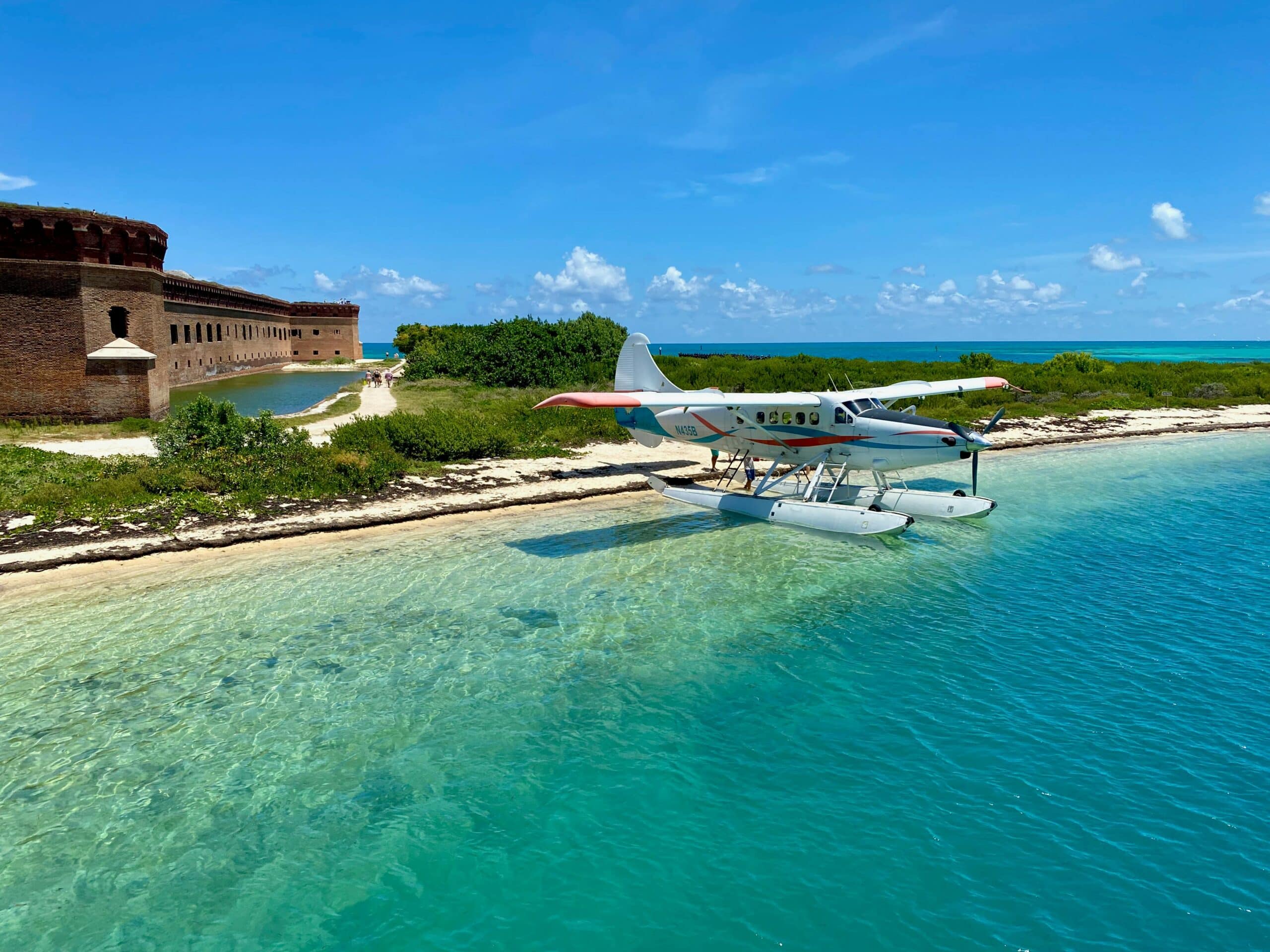
The fort is massive. The walls rise 50 feet. The parade ground spans 11 acres. Walking the entire perimeter takes 30–45 minutes. Climbing to the upper levels offers panoramic views of the islands and the open Gulf of Mexico. Plan at least 1.5 hours to explore the fort thoroughly.
Reservations Are Required Months in Advance
Commercial seaplane and ferry trips to Dry Tortugas sell out weeks or months ahead, especially during peak season (December through April). Private charter clients benefit from Air Flight Charters’ ability to coordinate with authorized operators, but advance planning remains essential. Do not expect to decide the day before.
Weather Cancellations Are Common
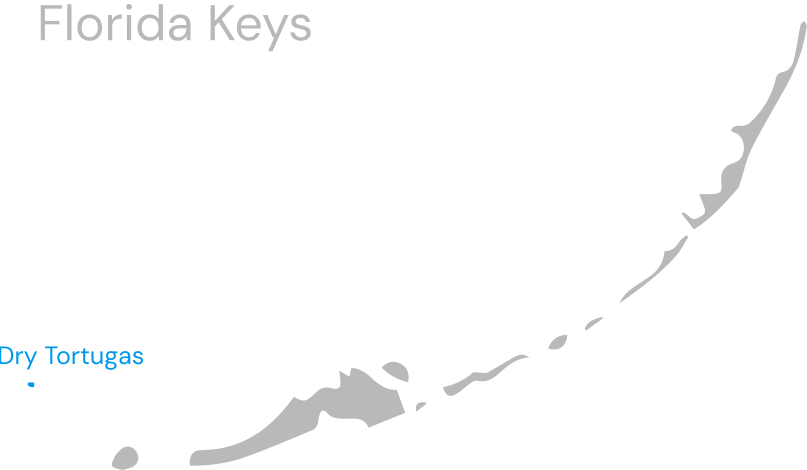
The 70-mile crossing from Key West to Dry Tortugas crosses open water. High winds, rough seas, or low visibility cancel seaplane and ferry operations regularly. Build flexibility into your itinerary. Have a backup plan in Key West. Travel insurance is strongly recommended.
Hurricane Season Runs June 1 to November 30
Peak risk is September through October. The park closes for tropical storms and hurricanes. Visitation during these months requires careful monitoring of weather forecasts and flexible scheduling.
Leave No Trace Is the Absolute Rule
Dry Tortugas is one of the most protected environments in the National Park System. Pack out everything you pack in. Do not take shells, coral, or any natural object. Do not feed or approach wildlife. The preservation of this place depends entirely on visitor discipline.
What to Pack Specifically for Dry Tortugas
One gallon of water per person (minimum), reef-safe sunscreen (mineral-based), polarized sunglasses, wide-brimmed hat, long-sleeved rash guard or lightweight shirt, swimsuit, water shoes (for rocky edges and coral), snorkel gear (if not provided by your tour operator), dry bag for electronics and valuables, lunch and snacks (no glass containers), first aid kit, and a light jacket or windbreaker (the crossing can be cool, even in summer).